Showing posts with label liquidators. Show all posts

Sunday, August 19, 2007

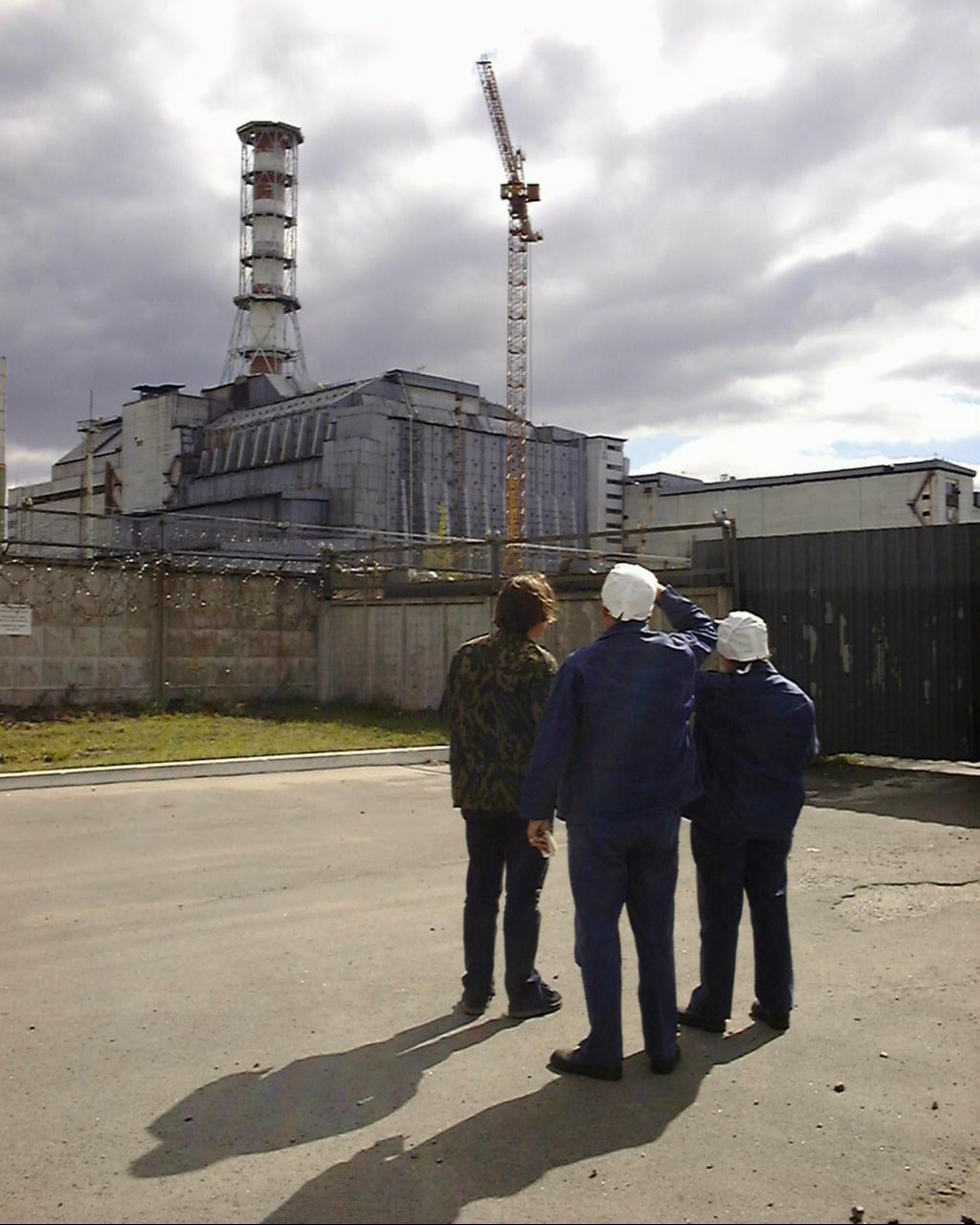
My second excursion to Chernobyl, told through photos


I've decided to present the second Chernobyl trip a little differently than the first. There were simply too many fabulous photos to choose from, so instead of going through the trouble of uploading them all to Blogger (a slow and arduous process that I was not looking forward to), I've prepared a photo album of sorts with captions explaining each of the images.

To view it, just follow this link:

Чорнобиль (Chornobyl), Trip #2

And click on the first photo. To flip through the album, just click on the photo that is currently on your screen, or click "next" in the upper-right-hand corner of your screen.

I couldn't fit all of the photos in one album, so I had to create a second one on the same site. It's available at this link:

Чорнобиль (Chornobyl), Trip #2 (Continued)

The links to these albums (and others) are also available under the "My Photos" section on the tool bar to the right.
_________________________________

In case you're curious, the boy with me is my boyfriend Reid (also a senior at Duke) who was wonderful enough to come visit me in Ukraine for 10 days (and crazy enough to want to go to Chernobyl, too).

Thursday, August 9, 2007

Musings about the liquidators


As you can see from the interview summaries I posted last week (here, here, and here), the Chernobyl liquidators share many of the same grievances. Namely, they feel cheated by government officials, whom they think ought to provide them with more social benefits for the sacrifices they made in the Exclusion Zone.

The liquidators are certainly entitled to such benefits. In fact, they are essentially war veterans because, whether they had a choice about it or not, they willingly faced an insidious force to protect their country. Just like war veterans, they sacrificed their own well being for the well being of their countrymen. Nevertheless, I see two factors that complicate the situation regarding their social benefits:


1. There have been few scientific links made between illnesses of the liquidators and ionizing radiation.
As you can see from the interviews, almost all of the liquidators attribute their current state of health to radiation exposure. But, you must also keep in mind that these men are growing older, and illness is a natural part of the aging process. Ultimately, the liquidators are not that much sicker than other Ukrainians in their age bracket. From the International Atomic Energy Agency:

The cancer and death rate studies that have been conducted among samples of the recorded liquidators have shown no direct correlation between radiation exposure at Chernobyl and increased cancer or death rates. The correlation between psychological problems and the status of liquidator is more clearly drawn, although the collapse of the Soviet Union and the economic troubles in Russia, Ukraine and Belarus may also be factors for psychological stress.

2) Ukraine is a poor and - to be quite honest - somewhat corrupt country. It’s not as if the liquidators are the only deserving group to not receive enough benefits from the government. Seniors, children, invalids, veterans, etc. are also struggling to live on the meager hryvnas given to them by the Ukrainian government. Now, I don’t want to downplay the heroism of the liquidators, and they are certainly entitled to public funds, but are they more entitled than sick children? Veterans of the Afghan War? The elderly? Their plight is a valid one, but it also one that is shared by every Ukrainian claiming public benefits.

Lately, I have been learning a lot about the economic situation in Ukraine from real Ukrainians, and the picture they have painted for me is not a very happy one. Jobs are scarce, especially outside the cities. Wealth is distributed very unevenly, leaving virtually no middle class. Politicians and a few businessmen possess the bulk of the country’s money, so it’s hard for Ukrainians too pull themselves up without 1) doing something illegal; 2) making connections with the politicians; or 3) some combination of both (as is often the case). There is a sense of hopelessness among some Ukrainians, who realize that no matter how hard they try, and no matter how educated they are, they will never be able attain a certain standard of living. It’s depressing to see and learn these lessons, and it makes me appreciate how lucky I am to have been born in America, where the prospect of upward mobility is such a given in our culture that it is often taken for granted.

Ukraine wants to join the EU. But, until it works out its economic and political problems, I don’t think that will happen anytime soon. Somehow, the country needs to remove corruption from its government and create more jobs for people. I’m not an economist, but it seems to me that these are two quite hefty tasks.

Friday, August 3, 2007

The Chernobyl liquidators: incredible men with incredible stories (Part 3)


This weekend, I will write an analysis of what I've learned so far from the liquidators and about the liquidators. But for now, here are a few more interview summaries:

Liquidator #7 - bus driver and strawberry wine enthusiast

Liquidator #7 was working for a construction organization in 1986. He remembers that it was a religious holiday (probably Orthodox Easter) when he first heard about the accident. His family had gone to church, and on the way back, they saw many buses headed to Chernobyl.

He also remembers that he had a garden full of strawberries. He was told not to eat them after the disaster because they were contaminated, but he had also been told to drink one glass of red wine every day as protection against radiation. So, he picked the strawberries and stored them in the sun until they became like wine. Since strawberry wine is red, he and his family and friends drank it all month, just like the officials said. The wine was very good, and he was very happy about this.

Liquidator #7’s job in Chernobyl was as a bus driver. He transported people to and from the clean part of the Exclusion Zone to the "dirty" part, where the Chernobyl NPP was. In 1986, he did this in Chernobyl for only one day. Then, he did it again from 1988 to 1990. It was one of the best paying jobs in Chernobyl at that time. He could spend 2 weeks at home and 2 weeks at work, and the payment was 4 times as big as it was in Kyiv. He chose to go to Chernobyl for the money.

There was nothing to be scared of, in his opinion. He changed his clothes often, and he cleaned himself a lot. His bus was quite contaminated, so he had to wash it many times.

He has had health problems since 1990, and he is ready for death. He does not know if radiation caused his illnesses – but half of his friends are now dead. They were liquidators, too.

If he could go back, he would make the same decision to go to Chernobyl. This is because he has children and grandchildren, and they have to be saved.

He does not think the Ukrainian government has treated him well at all. In his opinion, the politicians think only about themselves, not about the Ukrainian people. In his own words, “damn the government.”

Liquidator #8 - gas, oil, and kerosene delivery man

Liquidator #8 was born in the Luhansk Oblast in 1951. He heard about the accident at home, from his friends. He had no reaction to the news.

He was called to liquidation by the military department of his city in 1987. He had no choice about going there. His name was put on a special list. Everyone on this list was given a medical exam, and the next day they were all sent to Chernobyl.

Liquidator #8 was a driver in Chernobyl, transporting gas, oil, and kerosene. He was in the Exclusion Zone for 3 months. He had some problems with his health while he was inside the Zone – headaches and a cough – but when he left, everything became okay for a while. He was not informed about the risks of working in Chernobyl. He was only told which roads he was supposed to drive on. He was not scared.

Liquidator #8 has had very big problems with his health since 1987. He has not been able to work since 1990. He has problems talking and writing, and he has very bad headaches. He received an official irradiated dose of 8.149 roentgens; however, he thinks that his actual dose was higher. He thinks radiation caused his health problems.

He is very sad about the situation he is in. In his mind, he was “broken” during his time in Chernobyl, but he has received no benefits for the work he did there.

Given the current level of attention he receives from the Ukrainian government, he would not have agreed to be a liquidator if he could go back in time. The pension he receives for his lost health is too small. He would like to receive more social benefits from the government, such as a bigger pension and a better apartment than he has now.

Liquidator #9 - wall destroyer

Liquidator #9 was born in the Sumy Oblast in 1958. He heard about the Chernobyl disaster on the television. His reaction was negative, but he had no anxiety about it.

The military asked him to go to Chernobyl in 1987. His name was on their “list.” He had no choice in going; in fact, he feared that he would go to prison if he refused.

Liquidator #9’s job was to remove the old, bad layer of matter from the reactor walls. He was not told about the risks. Since he had no choice about going to Chernobyl, it “did not matter whether he was scared or not.” He was called there for 180 days, but he ended up being in Chernobyl for only 42 days.

He received an irradiated dose of 9.1 roentgens. Since 1987, he has had headaches, back pain, and leg and hand pain. It seems to him that his irradiated dose caused these problems.

Even for a lot of money, he would never go back to Chernobyl.

He does not think that the Ukrainian government cares about the liquidators.

Wednesday, August 1, 2007

The Chernobyl liquidators: incredible men with incredible stories (Part 2)


Hallway in the radiation clinic at RCRM, where liquidators come for medical treatment

I've been working furiously to transcribe the rest of these liquidator interviews. Below are three more. I think you may find them even more interesting than the first three. (Liquidator #6 was especially chatty.)

Liquidator #4 - delivery driver

Liquidator #4 was on vacation in his dacha in 1986. He had no reaction to the news of the Chernobyl disaster. He did not think it was serious.

He was a delivery driver in Chernobyl. He made his first trip to the site on the 5th of May. He took part in the transport of wares, water, and food. He was ordered to Chernobyl by the government. He did not have a choice in going there.

He was aware of the risks of working in an irradiated environment, but he was not scared. He was in Chernobyl until the end of summer, making delivery trips every other day.

Liquidator #4 has had problems with his vessels and thyroid gland recently. He also has had some back pain. He does not know if radiation exposure caused his health problems. However, he recalls that when he was making trips to Chernobyl, he had medical exams every month. The doctors did not find any problems with his health (although they did tell him it would be best for him to stop making trips to Chernobyl).

His car was cleaned many times while he worked in Chernobyl, because it was quite contaminated with radiation. In fact, it was once cleaned so well that the paint was stripped off. He never had to destroy it.

On a scale of 1 to 5, he rates his care from the government at a 2. He has concerns that some of the money that is allocated to Chernobyl liquidators and evacuees is being laundered by politicians.

If he could go back to 1986, he would not be a liquidator.

Liquidator #5 - special structures expert

Liquidator #5 was a military specialist in “special structures” in 1986. The Soviet Army gave him only 30 minutes to report to the Chernobyl site after the accident happened. He did not have a choice in going there.

He was not scared, and he said that he was informed of the risks of working in an irradiated environment. According to him, under the Soviet Union, all children studied radiation in school. It was part of the civil defense program.

Liquidator #5 was in the Chernobyl zone for 75 days, nonstop. He took part in the building of roads to the reactor and to the Chernobyl station. He received an official irradiated dose of 18 roentgens, but he is not sure if this number is accurate.

Liquidator #5 has had many health problems since 1986. In his own words, his “organism” is destroyed. He has ulcers, big problems with the vessels in his legs and head, hypertension, and so on. He thinks that his irradiated dose caused his health problems because he was healthy before the Chernobyl accident.

He cannot even estimate the help that the government has given him, because it is so low.

Knowing what he knows now, he would go to Chernobyl again. This is because the health of his children and his family must come first; his own health comes second in such a situation.

Liquidator #6 - upstanding Communist

Liquidator #6 heard about the Chernobyl accident while traveling to Russia to visit his parents. He was driving through Kharkiv, Ukraine, when the road police stopped his car. They asked him if he knew about the accident. He did not, so they told him the details. At first he thought that the news was not true, because he knew that nuclear reactors had seven levels of defense. But the road police insisted that it had happened, and they went on to measure his car for radiation (which was present).

In 1986, Liquidator #6 was working for the same construction firm that had built the destroyed reactor in Chernobyl. In fact, he was secretary of the Communist Party within this organization. When he and his fellow workers were asked to volunteer to be liquidators, he saw that no one wanted to do it. Because he wanted to set a good “Communist” example for them, he was the first to say, “I will go to Chernobyl.” He was quite surprised by the second person to volunteer: it was a Latin American worker who had been educated at Patris Lumumba University in Moscow. It was funny to him that this Latin American man was so willing to go to Chernobyl for the defense of Ukraine.

Officially, all liquidators were supposed to be 35+ years old and to have had their children already, but his group consisted of three quite young men. He was the oldest. They were taken by car to Vyshhorod. A group of forty people was formed there, and all of them were taken by bus to Chernobyl. His job was to supervise the transport of inert materials such as sand, bitumen, and gravel. In one day, he remembers transferring 20,000 cubic meters of material.

In his opinion, no one was scared to work in Chernobyl because no one knew anything about radiation. He personally was not scared because he had been in Syria in 1973, when it was attacked by Israel. There, he took part in the evacuation of 7,500 people. Driving an Italian bus, he evacuated women and children, and bombs were dropping constantly. In Chernobyl, there was nothing to be scared of – no noises, no smells, no heat. He had no reason to be scared.

Officially, his group of three was supposed to be changed after 7 days because they were working 800 meters from the NPP. However, they were not changed, and they ended up working a full month under the reactor.

He remembers that on May 20th, more than 4,000 people from all over the Soviet Union were in Chernobyl. Almost all of them wore white lab coats lined with 250 mm (EDIT: the translator probably meant µm) of metal. The Soviet government thought that such coats would protect people from the radiation. However, in his opinion, the lab coats were an insufficient defense.

Liquidator #6 has had lots of health problems since 1990. He had prostate surgery in 1999 and a stroke in 2000. Before that, he had a stomach ulcer, hypertension, pancreas problems, blood pressure issues, and so on. He received an official irradiated dose of 26 roentgens, but he thinks that this number is wrong.

He believes that radiation caused his health problems. He was very healthy before the Chernobyl accident; he worked a lot and had a very strong “organism” and immune system. But after the accident, he began to recognize big problems with his health. He has calculated that he has a total of 16 chronic diseases now. In his own words, there are no organs that work well in his body.

He regrets his decision to go to Chernobyl. The “Chernobyl situation” (the liquidator problem) is very bad now. Liquidators need 26 million hryvnas per year to cover the cost of living and receiving health care, but they only receive 10 percent of this sum from the government. He has no money in his family budget to cover his health costs.

He is angry with the Ukrainian government. Since they destroyed his health, he thinks that they should pay for it. He needs 300 or 400 hryvna per month to cover his disease treatments, but he officially receives only 12 hryvnas per month. He has had to ask the president of the Chernobyl Union for money.

Tuesday, July 31, 2007

The Chernobyl liquidators: incredible men with incredible stories (Part 1)


Memorial to Chernobyl liquidators at Mitino Cemetery, Moscow

The past two days have definitely been the most interesting for me research-wise since I arrived in Ukraine. I've been interviewing Chernobyl liquidators non-stop, and it's amazing to me how brave, how open, and just how damn interesting they all are.

So far, I have finished transcribing three of the interviews from my audio recordings. Thus, without further ado, let me introduce you to Liquidators #1, #2, and #3:

Liquidator #1 - physics teacher

Liquidator #1 was a physics teacher in the Zhytomyr Oblast in 1986. His workplace was 22 km from the Chernobyl NPP. He recalls that the reaction to the accident in his village was not very serious. Most people did not understand what had happened. However, as a physics teacher, he understood the severity of the disaster better than most.

Liquidator #1 voluntarily took part in the evacuation of his region, helping evacuate children in particular. One of the things he did was help children find their parents in the event that they were separated.

He lived in the Zhytomyr Oblast until 1998, at which time he moved to the Carpathian region (in the west). It was a little scary for him to work so close to the NPP after the accident happened. Evacuations were not well organized at all; people were told that they could return later, which was a lie. Old people in particular resisted.

We talked about his many health problems – cardiovascular diseases, pyschological diseases, neurological diseases. Liquidator #1 thinks that his health problems are partially due to radiation exposure, since his parents and grandparents all had unusually clean bills of health. Since 1988, not a year has passed where he wasn’t hospitalized.

Still, Liquidator #1 feels better now than he did 12 years ago. He has quit smoking and drinking, and he has started seeing a neurologist and a psychiatrist. He noted that under the Soviet Union it was frowned upon to see such doctors. People did not want to be categorized as psychologically-ill. Today, there is more freedom to choose the physician you need.

If he could go back in time, he would not change his decision to be a liquidator. He thinks that people need to help each other. He does not consider what he did to be very “special.”

He thinks that the care he receives from the Ukrainian government could be better.

Liquidator #2 - Metrostroy operator

Liquidator #2 was a Metrostroy operator in Kyiv in 1986. Metrostroy was the construction agency that built the Kyiv Metro. He and his colleagues were asked to go to Chernobyl soon after the disaster. In fact, they were the second group of workers to go there. (The first were the firemen.) Their job was to seal the floor of the reactor with metal insulation and concrete so that irradiated matter would not seep into the groundwater.

He agreed to go to Chernobyl out of patriotism. In his own words, if he did not do it, who would? He compared his choice to the choice of Soviet soldiers in WWII.

Liquidator #2 was informed of the risks of working in an irradiated environment. He was not frightened. Still, he received an irradiated dose of 28.2 roentgens over the three days he worked in Chernobyl. After recording this dose, he was forced to stop working at Chernobyl because the legal maximum dosage in 1986 was 25 roentgens. (Today, the official dosage limit is 2 roentgens per year.)

He has had health problems since 1986, which he partially attributes to his irradiated dose.

If he could go back to 1986, he would make the same choice to go to Chernobyl. In his own words, “this is our country, and somebody has to do it.”

We discussed the amount of attention the Ukrainian government gives liquidators. Liquidator #2 thinks that it is not enough, but it is still a little bit more attention than is given to pensioners, children, etc.

Liquidator #3 - mechanic

Liquidator #3 was a mechanic in the Poltova Oblast in 1986. The Soviet Military Office drafted him to Chernobyl, where his job was to remove irradiated matter from the third reactor’s roof. He had no choice about going there; he had to be a liquidator.

He was never officially told about the risks of working in an irradiated environment.

He received an irradiated dose of 25 roentgens over the two and a half months he spent in Chernobyl. Since this was the maximum limit in 1986, he had to leave the site after recording this dosage.

Liquidator #3 thinks that his irradiated dose has caused his many health problems.

He does not think that the Ukrainian government has taken good care of him. He wishes they would give him more “human attention.” He has been forced to figure out his problems for himself, even though he served his country in Chernobyl and in the Afghanistan War.